
Most households require between 100 and 300 Mbps for seamless streaming and remote work, while power users or large families should consider gigabit speeds. To determine how much internet speed do I need Newark, evaluate your number of connected devices and daily data habits; mid-tier plans generally offer the best balance for local residents.
Living in Newark puts you at the center of a major technological corridor, yet many residents still face the daily frustration of lagging video calls and endless buffering. You might feel pressured to purchase the highest gigabit tier available, but paying for raw speed often fails to address the actual bottlenecks in your home network. Understanding the specific bandwidth requirements of your household is essential for maintaining a stable, high performance connection without overspending on unused capacity. This guide examines the realities of local infrastructure and provides a practical framework for calculating your megabit needs. We will explore why managed traffic engineering provides a superior experience compared to unoptimized speed; furthermore, we will debunk common industry myths that lead to poor connectivity. By the end of this article, you will know exactly how to secure the best internet performance for your life in the Brick City.
The Realities of Internet Speed in the Brick City
Newark is a city of contrasts, from the high-density tech corridors of Downtown to the historic homes of Forest Hill and the vibrant, bustling streets of the Ironbound. In these diverse neighborhoods, the digital landscape is often dominated by aggressive marketing from national providers promising massive gigabit speeds. However, for most residents and local businesses, these large numbers rarely translate to a better daily experience. The reality is that raw bandwidth is often a vanity metric that masks poor network management and peak-hour congestion.
When evaluating how much internet speed do I need Newark users should focus on optimized speed rather than raw bandwidth. A massive connection that suffers from high latency or packet loss during a busy Tuesday evening in the North Ward is less useful than a leaner, professionally managed one. At insistnet, we provide high-speed connectivity for homes through optimized packages ranging from 1Mb to 7Mb. These tiers are built on sophisticated traffic engineering and spectrum management designed to handle the specific infrastructure of the Brick City.
Large ISPs often push customers toward expensive plans with ghost bandwidth that remains unused or unavailable during high-traffic periods. A merchant managing a POS system on Ferry Street or a professional at a remote workstation in University Heights needs consistency over capacity. By prioritizing traffic engineering, we ensure that critical data moves without disruption. Backed by seven day technical support and weekend installations, our approach focuses on delivering reliable performance that matches the practical, day-to-day requirements of Newark households.
Understanding Megabits: What Different Speeds Actually Do

To answer the question of how much internet speed do I need Newark residents must first understand that a megabit per second (Mbps) is a measure of capacity, not a guarantee of performance. Think of it as the diameter of a pipe; while a larger pipe can move more water, the pressure and consistency of that flow are what actually determine if you can take a shower without interruption.
At the 1 to 2 Mbps level, your connection is perfectly suited for essential digital communication. This tier provides enough throughput for sending and receiving professional emails, browsing the web for research, and engaging with social media platforms. It is a practical choice for individuals who primarily use the internet as an information tool rather than a primary entertainment hub.
Moving into the 3 to 5 Mbps range introduces the capability for more media-intensive tasks. For remote workers in Newark, this speed tier supports standard definition (SD) streaming and reliable video conferencing. By selecting one of our optimized packages, you ensure that these critical activities receive the necessary bandwidth without being throttled by background processes. This level of service is often the sweet spot for single-user households where consistent connectivity for work-from-home applications is a priority.
The 7 Mbps tier represents our highest level of residential performance. When managed properly through our spectrum management protocols, 7 Mbps is capable of supporting high-definition (HD) streaming and allowing multiple devices to operate simultaneously.
Speed Tier | Primary Use Case | Recommended Activity |
|---|---|---|
1-2 Mbps | Basic Connectivity | Email, Social Media, Web Browsing |
3-5 Mbps | Remote Work | Video Calls, SD Streaming, Cloud Docs |
7 Mbps | Multi-Device | HD Streaming, Simultaneous Users, Large Downloads |
It is vital to contrast these managed tiers with the unmanaged speeds marketed by larger providers. While a competitor might promise a 25 Mbps connection, that speed is often "bursty" and prone to significant drops during peak evening hours in densely populated Newark neighborhoods. Because we utilize sophisticated traffic engineering, an insistnet 7 Mbps connection often feels faster and more responsive than a larger, unmanaged connection that suffers from local network congestion.
Calculating Your Household Bandwidth Needs in Newark
Determining your actual requirements requires moving past the "more is always better" marketing approach and looking at your daily habits. To accurately assess how much internet speed do I need Newark residents should evaluate their household based on active users and the specific tasks they perform simultaneously. In a managed network environment, you do not need a hundred megabits to have a seamless experience; you need a connection that remains stable regardless of how many people in your neighborhood are online.
Consider a student living in a studio apartment in University Heights near NJIT. For academic research, syncing cloud documents, and standard video streaming, a consistent 3Mb connection is more than sufficient. Because this speed is dedicated and managed through our spectrum protocols, it avoids the stuttering and buffering often seen with unmanaged high-bandwidth plans during the peak evening hours when everyone in the apartment building is using the same infrastructure.
For a multi-person household, such as a family living near Branch Brook Park, the calculation shifts to account for concurrent usage. If you have two students working on school projects while a parent attends a remote meeting or streams a training video, our 7Mb tier provides the necessary headroom to keep all three active without interruption.
Household Composition | Typical Activities | Recommended Tier |
|---|---|---|
Single Professional or Student | Web research, email, music streaming | 1Mb to 3Mb |
Two-Person Household | SD streaming, social media, light remote work | 3Mb to 5Mb |
Small Family | HD streaming, video conferencing, multi-device use | 7Mb |
The effectiveness of these optimized packages relies on our proactive spectrum management. In many parts of Newark, signal interference from neighboring routers and older building wiring can degrade an unmanaged signal. We use traffic engineering to ensure that your 7Mb connection stays at 7Mb even when the city's internet traffic spikes at 7:00 PM. This level of high-speed connectivity for homes means you are paying for performance you actually receive, rather than a top-line number that disappears when you need it most. By calculating based on active, simultaneous use rather than total devices owned, you can avoid the trap of paying for ghost bandwidth.
Why Managed Traffic Engineering Beats Raw Speed

The disconnect between advertised numbers and actual experience often stems from a lack of network management. Traffic engineering is the process of actively directing data packets to prevent digital bottlenecks. In a city like Newark, where local infrastructure varies from block to block, unmanaged networks often experience jitter and high latency. These issues manifest as frozen video screens or delayed responses during online tasks. By applying optimized packages with strict traffic management, we ensure that your connection remains rock solid, even when the rest of your neighborhood is logging on simultaneously.
Spectrum management is equally critical for urban connectivity. In the dense residential areas of the Brick City, wireless signals frequently compete for space, causing interference that slows down unmanaged routers. Our technical team uses spectrum management to find the cleanest frequency path for your data. This professional oversight allows a managed 7Mb connection to consistently outperform a 25Mb connection from a cable provider that might burst to a high number for a few seconds before crashing under the weight of local congestion. This inconsistency is exactly why many Newark residents end up paying for ghost bandwidth, which is capacity that exists on a marketing flyer but disappears during your actual workday.
Beyond raw delivery, professional traffic engineering allows for data prioritization. When you are on a Zoom call or running a cloud backup, our network recognizes these as critical tasks and gives them priority over background updates or non-essential downloads. This ensures that your most important activities never stutter. When evaluating how much internet speed do I need Newark users should prioritize the quality of the signal over the size of the number. This specialized high-speed connectivity for homes focuses on the stability of every megabit, providing a level of performance that large, unmanaged providers simply cannot match.
Local Support and Installation: The Newark Advantage
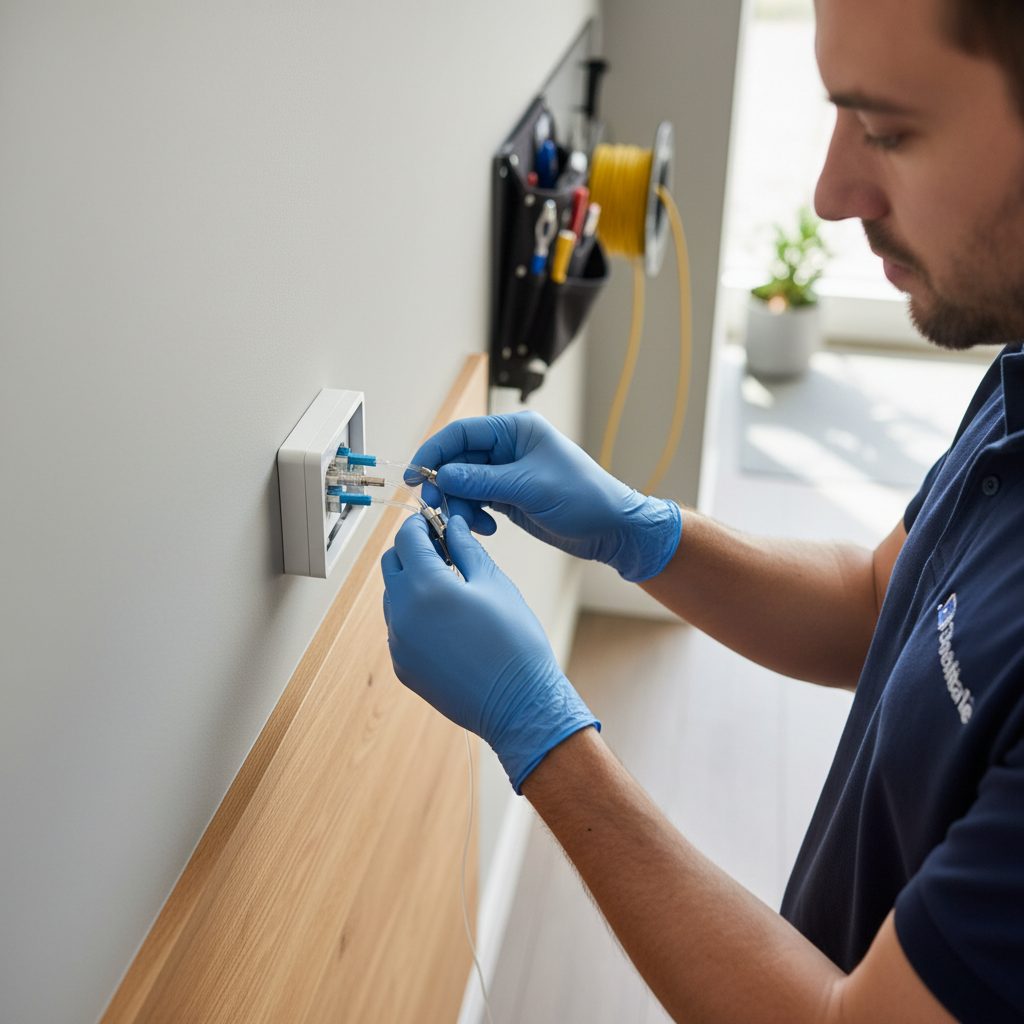
Technical engineering provides the foundation for performance, but reliable service also requires accessible, local expertise. Residents who commute to Manhattan or work standard hours in Downtown Newark often find it impossible to wait for a technician during the traditional workweek. By offering weekend installations, we eliminate the need to take time off work just to get connected. This logistical flexibility is paired with seven day technical support, ensuring that assistance is available whenever a question arises about your optimized packages.
The physical infrastructure of Newark, particularly in historic neighborhoods like the Ironbound or the North Ward, presents specific challenges that national providers often overlook. Older buildings with dense masonry or outdated internal wiring can interfere with signal quality. Our local technicians possess a deep understanding of these Newark specific hurdles. Instead of following a generic script from a distant call center, they provide expert advice on hardware placement and spectrum management tailored to your home's layout. This localized approach ensures that when you evaluate how much internet speed do I need Newark, the solution accounts for your building’s architecture. This level of insight results in more consistent high-speed connectivity for homes by addressing the physical realities of the Brick City's residential landscape.
Common Myths About Internet Speed
Misconceptions about bandwidth often lead people to overpay for services they do not fully utilize. A common myth is that high-definition streaming requires 100Mbps or more. In reality, a managed 7Mb connection from our optimized packages is more than sufficient for HD streaming because it provides the consistency needed to prevent buffering. Similarly, many gamers believe they need a gigabit connection for competitive play. Online gaming is actually dependent on low latency and stability, not raw volume. Most games use less than 1Mbps during active play; therefore, a stable 5Mb connection with low ping will consistently outperform a congested 100Mb line that suffers from packet loss.
When asking how much internet speed do I need Newark residents should look at their specific usage cases rather than marketing hype. A senior citizen in the North Ward using a tablet to video call grandchildren needs a reliable, jitter-free signal more than a high-speed tier. Likewise, a small business on Ferry Street needs a consistent link for POS systems and credit card processing. These critical tasks require very little data but demand 100% uptime. By debunking these myths, users can focus on the high-speed connectivity for homes that actually delivers performance where it counts.